
Foundation News
Built on Grit, Strengthened by Support: The WrightWay Beauty Supply Story
April 30, 2026
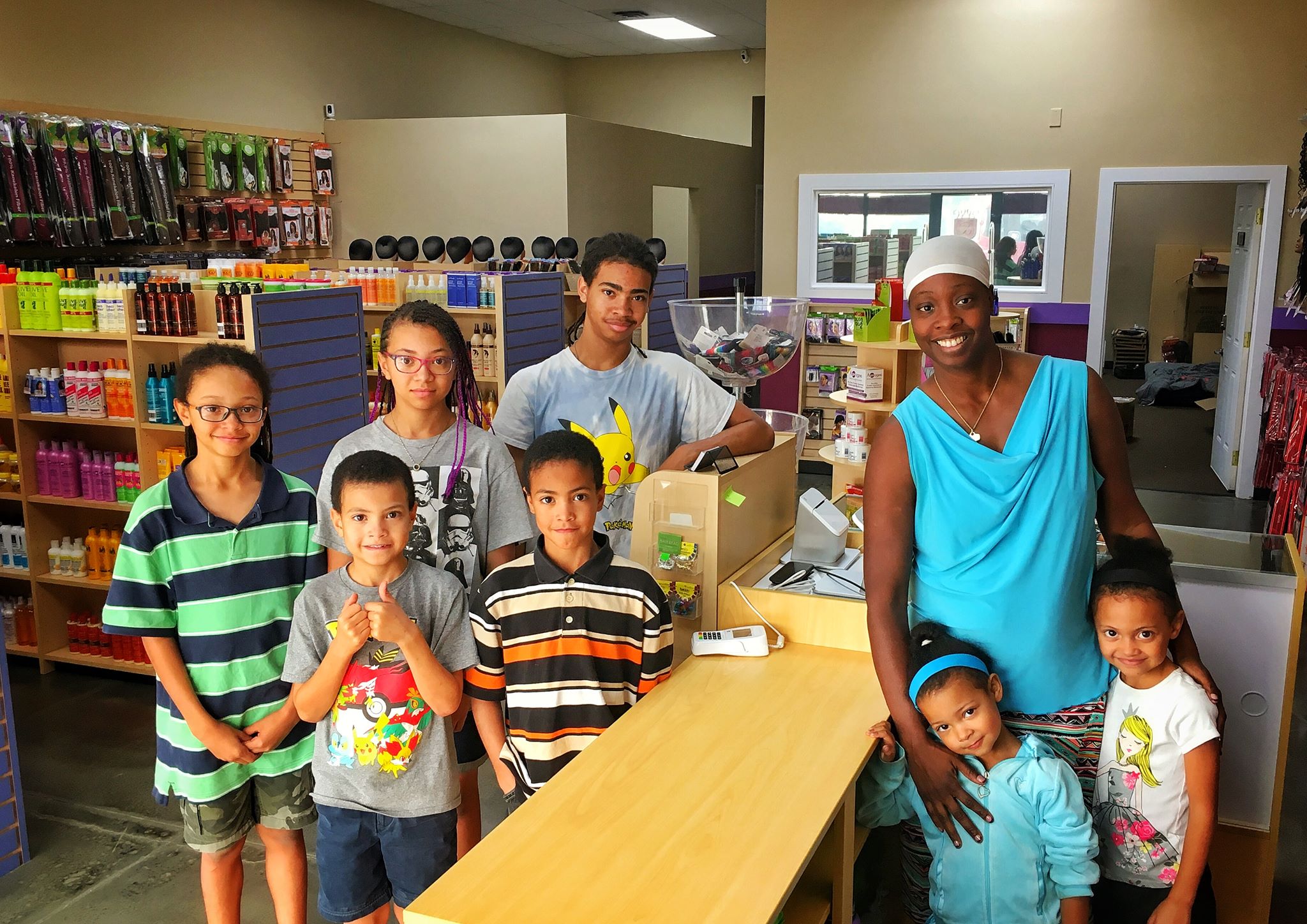
On Spokane’s North Side, bright rows of braiding hair, textured extensions, satin bonnets, and specialty shampoos line the shelves at WrightWay Beauty Supply. The store is more than a retail space — it’s a hub. Customers swap styling tips at the counter. Military families ask about products they used back home. Foster parents seek guidance on how to care for children’s natural hair. And owner Shania Wright often moves easily between them all, offering advice, encouragement, and connection.
As the only Black veteran-owned beauty supply store in Spokane, WrightWay Beauty Supply fills a gap in the Inland Northwest. Wright stocks specialized products for textured and ethnic hair care — items that once required customers to drive hours or order online without knowing if they’d work. She networks with local stylists who specialize in braiding and weaving and helps connect customers to trusted professionals. She’s also worked with local and state agencies to educate foster and adoptive parents about caring for children of color.
But building that kind of community anchor didn’t come easily.
An industry without a roadmap
When Wright opened her doors in 2017, she quickly discovered that traditional financing didn’t fit her industry.
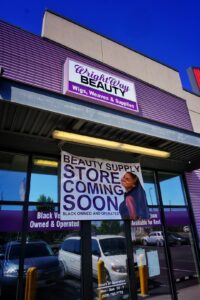
Many long-standing beauty supply stores that cater to African American women were built through family networks and informal financing. As a result, mainstream lenders often lack comparable metrics or industry benchmarks to evaluate newer, independently owned stores like hers.
When Wright approached a major bank seeking $75,000 to launch the business, she was approved for only a fraction of that amount. “That’s not enough to open a store,” she recalled thinking.
So she did what many small business owners do when conventional doors close: she improvised. Wright opened the store using multiple credit cards, carefully juggling balances and racing to pay them off before interest rates spiked. By 2020, she and her husband had eliminated that debt — but it came at a cost.
“We were so focused on getting out from under the debt that we didn’t always have enough to replenish inventory,” she said.
And in retail, empty shelves are more than an inconvenience. They’re lost revenue.
“It wasn’t that customers stopped coming,” Wright explained. “It was that I couldn’t meet the minimums to get the product from suppliers.” Without the cash flow to place large enough orders, she began losing money simply because she didn’t have the merchandise customers wanted.
She started to consider drastic measures — even taking a night job — to keep the business afloat.
A lifeline at the right time
Then she learned about the Credit Building Pilot Program’ Small Business Resiliency Loan program through the Asian, Hispanic, African, Native American Multi-Ethnic Business Association (AHANA), a local nonprofit partner that had consistently stayed in touch and offered hands-on support.
When Wright was approved for a low-interest loan through the program, she felt two things at once: excitement and fear.
 “I was happy there was a program like this,” she said. “But I thought it was too good to be true.”
The structure felt almost radical. She would receive affordable capital to stabilize her business. If she repaid the loan in full and on time, she would receive a grant for the same amount — money she would not have to repay.
“It was such a lifeline,” Wright said.
The working capital allowed her to restock shelves, meet supplier minimums, and get products back in customers’ hands. With inventory stabilized, sales followed.
But the impact went deeper than product orders.
From surviving to building
Before the loan, Wright often worked alone — sometimes seven days a week. Customers had grown accustomed to seeing only her behind the counter. When she hired help in the past, sales sometimes dipped if she wasn’t physically present.
The loan changed that equation.
With stabilized cash flow, Wright could offer more competitive wages and be selective about hiring. She now has four full-time positions in the store — a level she had never been able to sustain before.
“I didn’t know what freedom came with four employees,” she said. “Two is comfortable. Three is nice. But four means I don’t have to be here every day.”
For the first time in eight years, she could begin shifting from working in the business to working on the business — strengthening operations, training staff, testing new ideas, and planning for long-term growth.
The funding also allowed her to experiment. “You always have ideas if you had money to try this or that,” she said. “Because of the funding, I was able to test that out.”
The difference was measurable not only in staffing but in sustainability. Instead of constantly deciding whether to pay down debt or restock inventory, she could do both responsibly. Instead of worrying about whether payroll could be met, she could focus on building a team customers trust.
Accountability — and opportunity
Wright took the responsibility seriously. She worried that if she struggled to repay the loan, it might reflect poorly on the program and limit opportunities for other entrepreneurs. But the support from AHANA didn’t stop once the paperwork was signed. Staff checked in regularly, offered connections to other resources, and stayed engaged.
“They didn’t just give us the money and disappear,” Wright said. “They followed through.”
The loan will be fully repaid in July 2026. When it is, Wright will receive a grant equal to the original loan amount — capital she plans to keep in savings as an emergency reserve.
“I don’t ever want to be in that position again,” she said. “If something mirrors what happened before, then I’ll touch it. But otherwise, it’s going to sit there.”
That reserve will become WrightWay Beauty Supply’s own built-in lifeline — a safeguard against future disruptions.
Looking ahead
Today, Wright’s goal is clear: build a business that functions independently of her daily presence.
“I don’t want to be the only reason it’s here,” she said.
She hopes to add two more employees and continue strengthening systems so she can step back from constant floor coverage and focus on strategy, partnerships, and expansion. She wants WrightWay Beauty Supply to remain a place where military families find familiarity, foster parents find guidance, and customers find products designed specifically for them.
Access to capital didn’t just help WrightWay Beauty Supply survive a difficult stretch. It created breathing room. It stabilized operations. It allowed experimentation. It supported job creation. And ultimately, it helped transform a business built on grit and credit cards into one built on stability and vision.
For Wright, the program wasn’t simply a loan: “It was a lifeline.”
Posted in Community Impact.