
Foundation News
Designed for Everyone: How Inclusive Imagination Turned an Idea into Impact
April 30, 2026
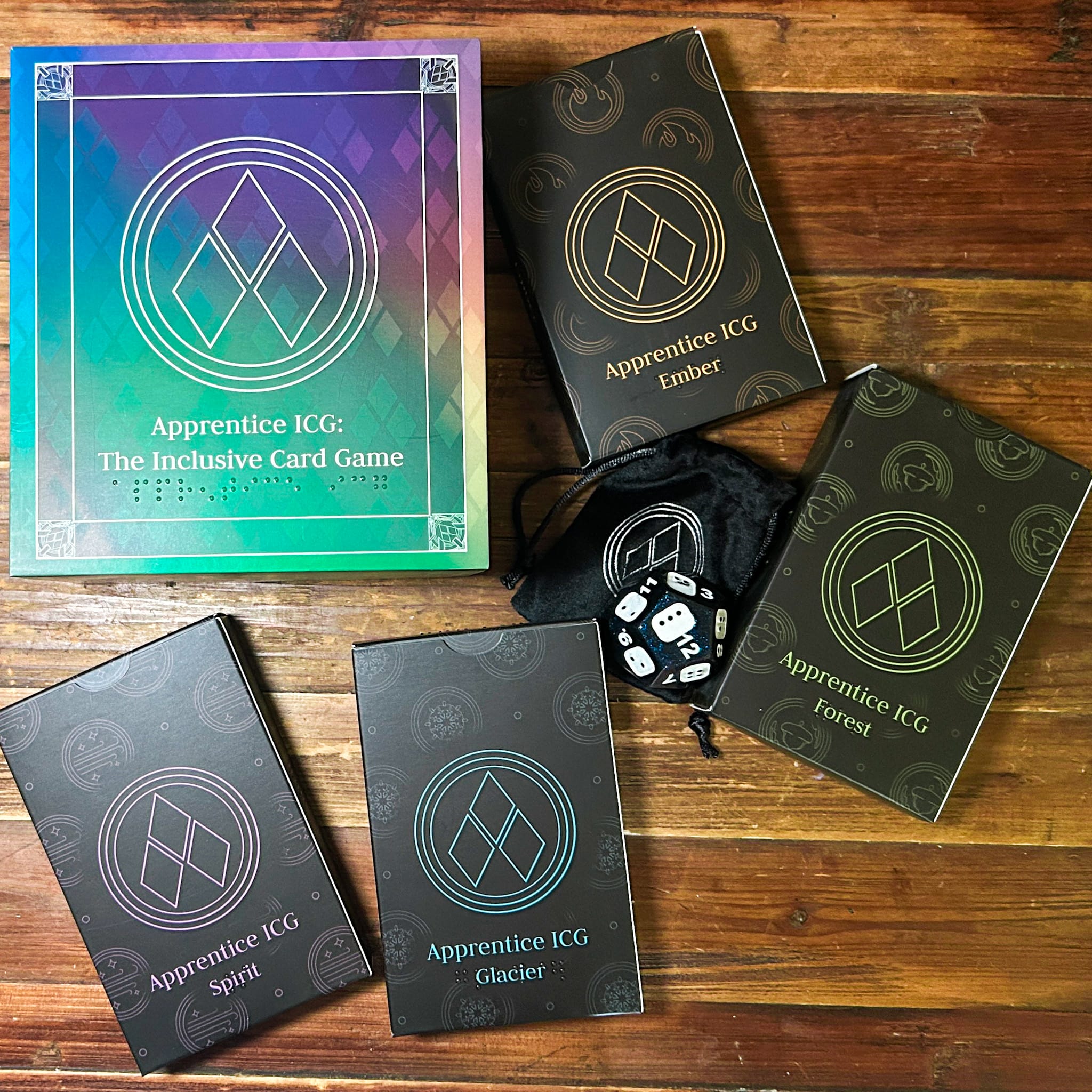
On tables across the country, brightly colored dice tumble across the surface. Cards fan out in players’ hands. There’s strategy, competition, laughter — and something more. Every game, component, and even the packaging is designed with universal access in mind, incorporating print and braille elements, tactile features, and digital enhancements. Every design choice considers players who are blind, neurodivergent, or who use adaptive switches.
For Garrett Whitmyre, founder of Inclusive Imagination, this isn’t just about creating another tabletop game. It’s about designing experiences where everyone at the table can fully participate.

Inclusive Imagination designs and manufactures universally designed tabletop games and accessories for everyone — especially individuals with sensory or physical disabilities and those who are
neurodivergent. The idea for the business was first sparked in 2022 by Whitmyre, a full-time teacher of students with visual impairments. By 2024, the company’s first products were available for purchase.
But turning that idea into a viable business required capital — and a way to grow without taking on overwhelming risk.
An Idea — and a Gap in the Market
Whitmyre didn’t start with a business degree. He started with a need he saw every day in his classroom.
“I just had this crazy idea and some printed paper with braille stickers on it,” he said of the early days. “But I thought it could go somewhere.”
Through the William Factory Small Business Incubator in Tacoma, he began building the business’ foundation. The incubator helped him understand profit and loss statements, balance sheets, and accrual accounting — tools that transformed a mission-driven concept into something financially grounded.
Still, one challenge loomed large: there was no finished product yet. No proof of concept. No sales history.
 “It was very mission-based,” Whitmyre said. “People understood the story, but there wasn’t something I could put in their hands and say, ‘Here — this works.’”
Traditional lending options were available, but often at steep costs. “If you’re willing to sign on the dotted line for a 20% interest loan, they’re down for it,” he said of traditional banks. “But finding something that wasn’t that — and a chance to grow in a safe way — that was huge.”
A Different Kind of Financing
Through William Factory, Whitmyre learned about the Credit Building Pilot Program’s Small Business Resiliency Loan, offered in partnership with O Bee Credit Union.

The structure immediately stood out.
“Here’s a loan-to-grant program with 3% interest — and then you get a grant in the loan amount and reimbursed on the interest at the end if you pay it off,” he said. “I was like, this is too good to be true. How is this even possible?”
The program provided Whitmyre with a $25,000 loan at 3% interest in June 2024, and after successfully completing a 12-month repayment plan, he received the matching grant in June 2025.
“It was surprising for how good it was, especially in financially uncertain times,” Whitmyre said. “The loan gave me momentum, and then getting the grant amplified it in a great way. It’s been an incredible blessing to have the grant. It’s money to do exactly what I want with to help promote the business’ mission.”
From Concept to Creation
The $25,000 loan funded the first critical step: moving from prototype to production.
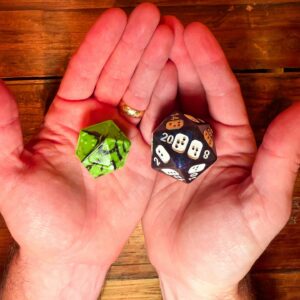
He launched accessible dice featuring both print and braille symbols — including polyhedral dice for role-playing games, standard playing dice, and silicone dice designed for quieter gameplay. The funding covered manufacturing setup, mold fees, and initial inventory.
It also supported professional artwork, production, and the launch of an original card game. Each card includes braille and a QR code linking to an image description, ensuring blind players can fully experience the art.
A small print run of approximately 500 copies marked a milestone moment.
“I still remember when 74 large shipping boxes arrived at my house,” he said. “They barely fit in my one-car garage.”
One early, impactful customer — the Washington State School for the Blind Outreach Program — provided powerful validation that the concept resonated.
Reducing Risk, Increasing Confidence
 For Whitmyre, the loan-to-grant model did more than provide capital. It reduced stress. “Starting a business is very stressful,” he said. “Knowing that if I really mess this loan up, I’ll be back at zero — it’s kind of like a failsafe.”
The structure meant he wasn’t gambling on high-interest debt, and the matching grant created breathing room. That stability allowed him to focus on refining products, building awareness, and expanding outreach. One of his games, Apprentice, was selected for the PAX Rising Showcase — part of the largest tabletop gaming conference in the country — where the response was immediate and enthusiastic.
“The amazing thing was that the games sold out in a day and a half — not just because of the mission but because people genuinely found them fun,” Whitmyre recalled happily. “That’s always been the point: universal fun for anyone of any ability.”
Amplifying the Mission
Today, Inclusive Imagination continues to grow its audience through social media, conferences, and partnerships with schools and libraries. The company also developed a free digital companion app that is adaptive-switch accessible, expanding participation even further.
But Whitmyre is clear about what made this stage possible. “The value of the loan? Invaluable,” he said. “It was real, and it happened. I would recommend it to anybody.”
His advice to other entrepreneurs is straightforward: Take unique funding opportunities whenever you can. “It’ll just change your business — for the better.”
Access to capital didn’t just help Inclusive Imagination manufacture dice and launch a card game. It provided safety, structure, and scalability. It turned an idea rooted in inclusion into tangible products on tables across the country.
And for Whitmyre, that combination of momentum and mission is just the beginning.
Posted in Community Impact.